Technical Practice
Practical systems work that supports credibility in technical markets.
These projects show a consistent pattern: find a constraint, learn the system, build a working setup, and make it useful in everyday operation.
Together they show technical curiosity, self-directed learning, infrastructure thinking, and comfort with markets where software, hardware, trust, and adoption meet.
Infrastructure Backbone
A multi-country self-hosted stack built for resilience, control, and practical operation.
The software projects below sit on infrastructure I operate myself: two Fujitsu 1U servers connected as a small private platform rather than a loose collection of apps. Services such as Nextcloud, ntfy, Forgejo, monitoring, and backups run on top of that foundation.
Two Fujitsu 1U servers operated as a multi-country infrastructure setup.
Fibre uplinks with separate LTE fallback connections.
WireGuard site-to-site VPN connecting the infrastructure as one private network.
Proxmox provides virtualisation and service isolation across the stack.
Uptime Kuma monitors availability across the self-hosted services.
Proxmox Backup Server provides redundant backup coverage across the setup.
Ansible handles automated security patching and recurring maintenance work.
Forgejo provides a self-hosted Git server for code and deployment work.
Selected Projects
Three practical initiatives built from the same operating logic.
The backbone above explains the infrastructure layer. The projects below show where that builder mindset becomes useful in the field: sensors, self-hosted services, and complex legacy systems.
Remote irrigation monitoring for water-scarce farming.
A field system built around hardware, connectivity, telemetry, dashboards, and real adoption constraints.
02Self-hosted infrastructure built around digital sovereignty.
A practical migration from large platform dependencies to an operating stack I run myself on multi-country infrastructure.
03Range Rover P38 restoration with a custom open retrofit.
A long-term restoration project spanning mechanical systems, legacy architecture, and a custom touchscreen subsystem.
01
Project One
Remote irrigation monitoring and control for farmers in Andalusia.
A practical infrastructure project built around a real resource constraint: water scarcity.
In Andalusia, water is an extremely scarce resource. I help farmers monitor and control irrigation remotely by building the sensing and delivery chain end to end: field hardware, LoRaWAN or LTE connectivity, MQTT-based telemetry, server-side operation, and browser-based use.
What matters for the broader profile is the operating logic. A technical system only creates value when it solves a real constraint, works reliably in the field, and is simple enough for users to adopt.
Project framing
In Andalusia, water scarcity makes visibility and control operationally critical.
I build the sensor hardware myself, measure tank and flow data, and transmit telemetry via LoRaWAN or LTE to my MQTT servers.
Farmers use browser-based dashboards to monitor water levels, review flow, and steer irrigation remotely.
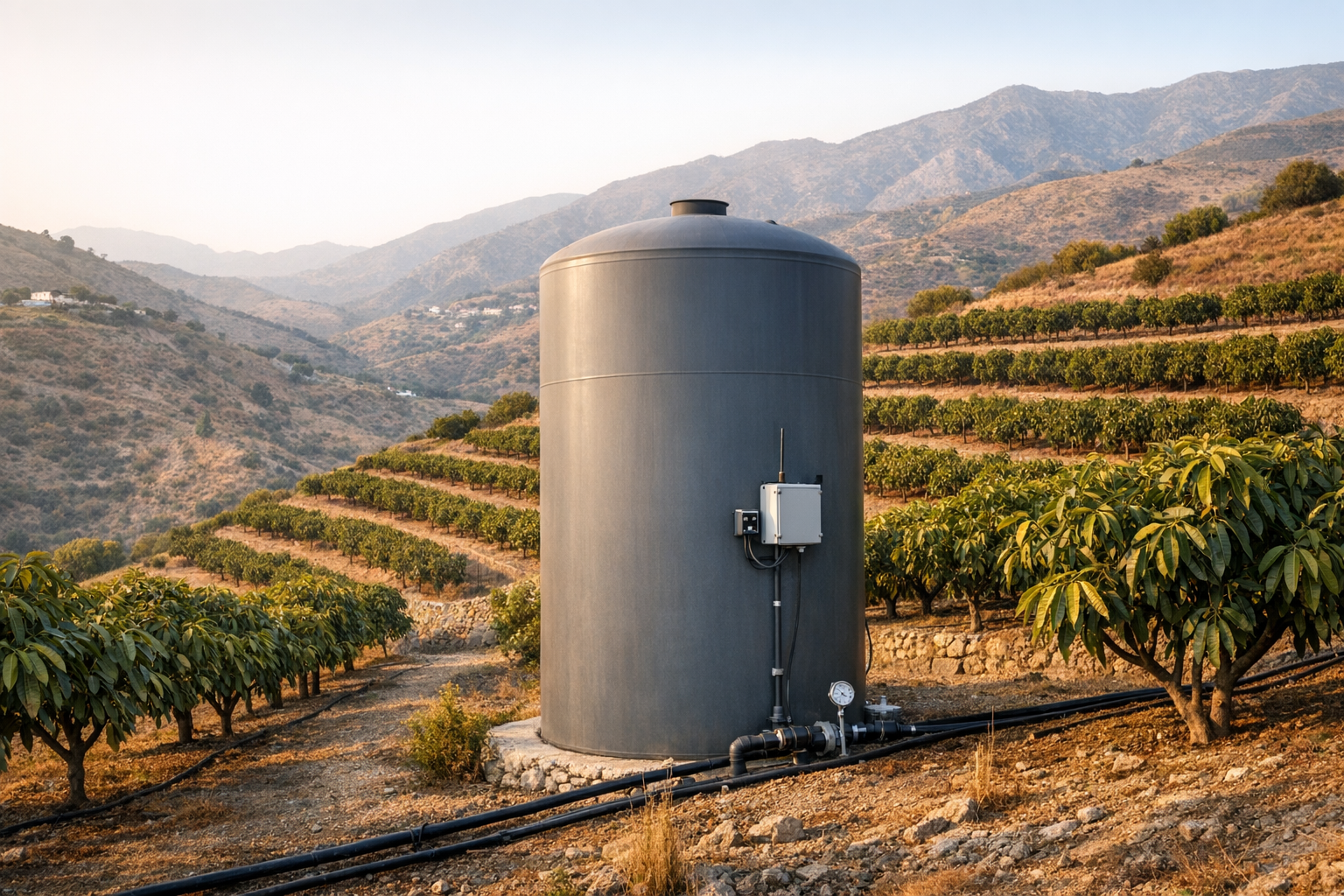 Field Context
Deposito tank placed within a plantation on sloped agricultural terrain.
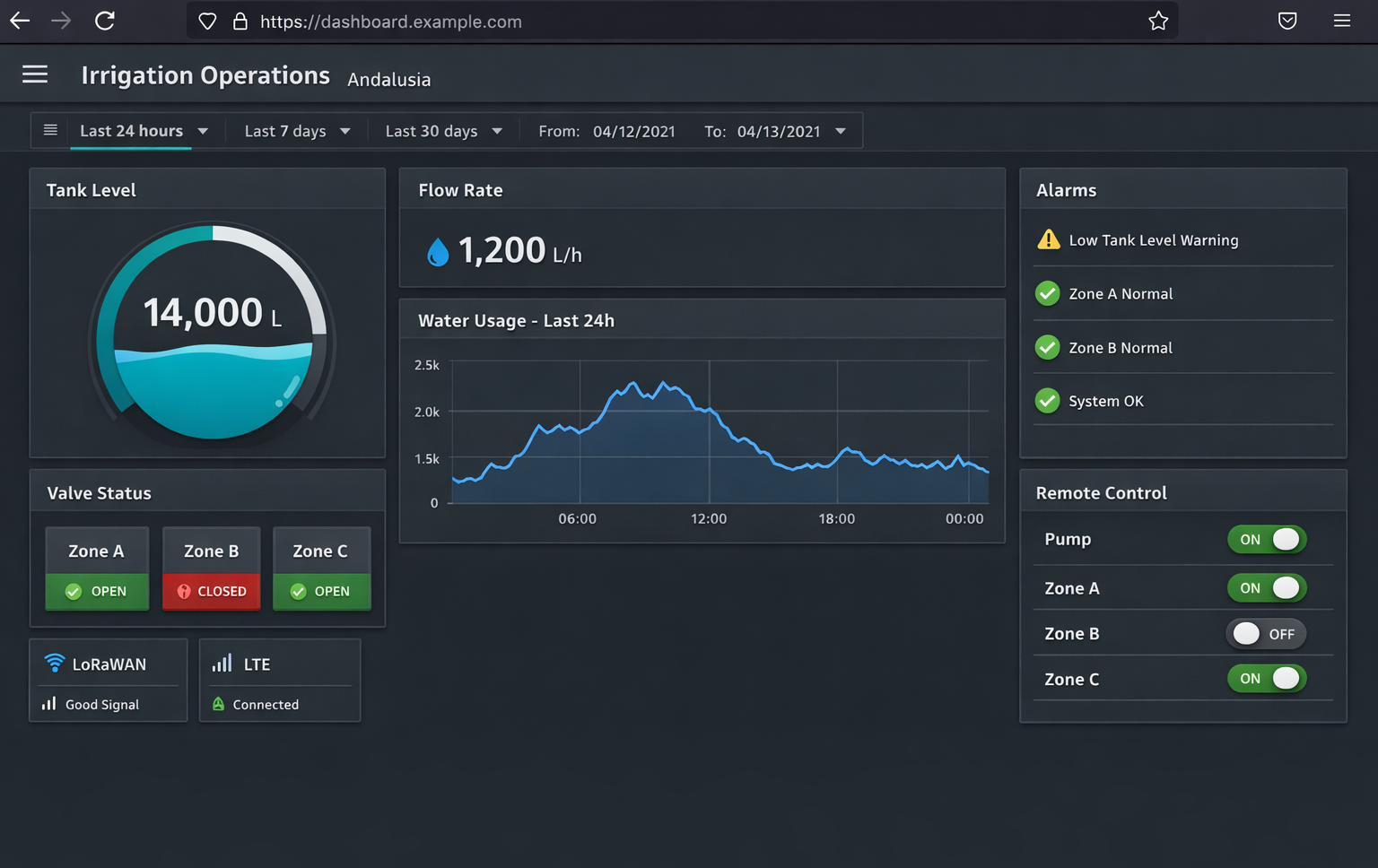 Operations Dashboard
Browser-based monitoring and remote control for tank level, flow, alarms, and irrigation zones.
02
Project Two
Migration from platform dependency to a self-hosted operating stack.
A personal infrastructure project about digital sovereignty, resilience, and control over the systems I use every day.
I migrated my own digital environment away from major US-based services and rebuilt it on self-hosted infrastructure running across my own multi-country server setup. At its core, it is an effort to reduce dependency and regain control over infrastructure, data, communication, and operational dependencies.
This is the clearest technical bridge in the portfolio: infrastructure, trust, dependencies, resilience, and user control are not only technical topics. They are also commercial and strategic topics in any market built on software rails.
Project framing
Reduce dependency on major US-based services and regain control over data, communication, and infrastructure.
OneDrive moved to Nextcloud, Google Calendar to Nextcloud Calendar, Firebase Cloud Messaging to ntfy, and WhatsApp to Matrix.
The multi-country server setup, linked by WireGuard, also runs ThingsBoard, Home Assistant, and Frigate with TPU-backed AI object detection.
MicrosoftNextcloud


Google CalendarNextcloud Calendar

WhatsAppMatrix


FCMntfy


Beyond the migrations themselves, the stack includes application hosting, monitoring, AI-based object detection in the surveillance layer, and a WireGuard site-to-site connection across the infrastructure.
03
Project Three
Range Rover P38 restoration with a custom open infotainment retrofit.
A full restoration project in which the infotainment retrofit is one part of a much larger whole.
I am restoring the Range Rover P38 as a whole, not just redesigning a navigation unit. The main work sits in the car itself: engine, body, mechanical substance, and bringing an ageing vehicle back into strong condition. The touchscreen project is one smaller but revealing part of that larger process.
The pattern is the same as in the other projects: understand a complex legacy system, respect its constraints, identify the weak point, and rebuild the part that improves usability without pretending the rest of the system does not matter.
Project framing
The main project is the vehicle itself: engine, bodywork, mechanical integrity, and the return to a strong original standard.
The infotainment retrofit is one subsystem within that broader restoration, not the restoration itself.
I designed and 3D-printed a custom frame, integrated a touchscreen, and connected it to a Raspberry Pi 5 running a LineageOS fork.
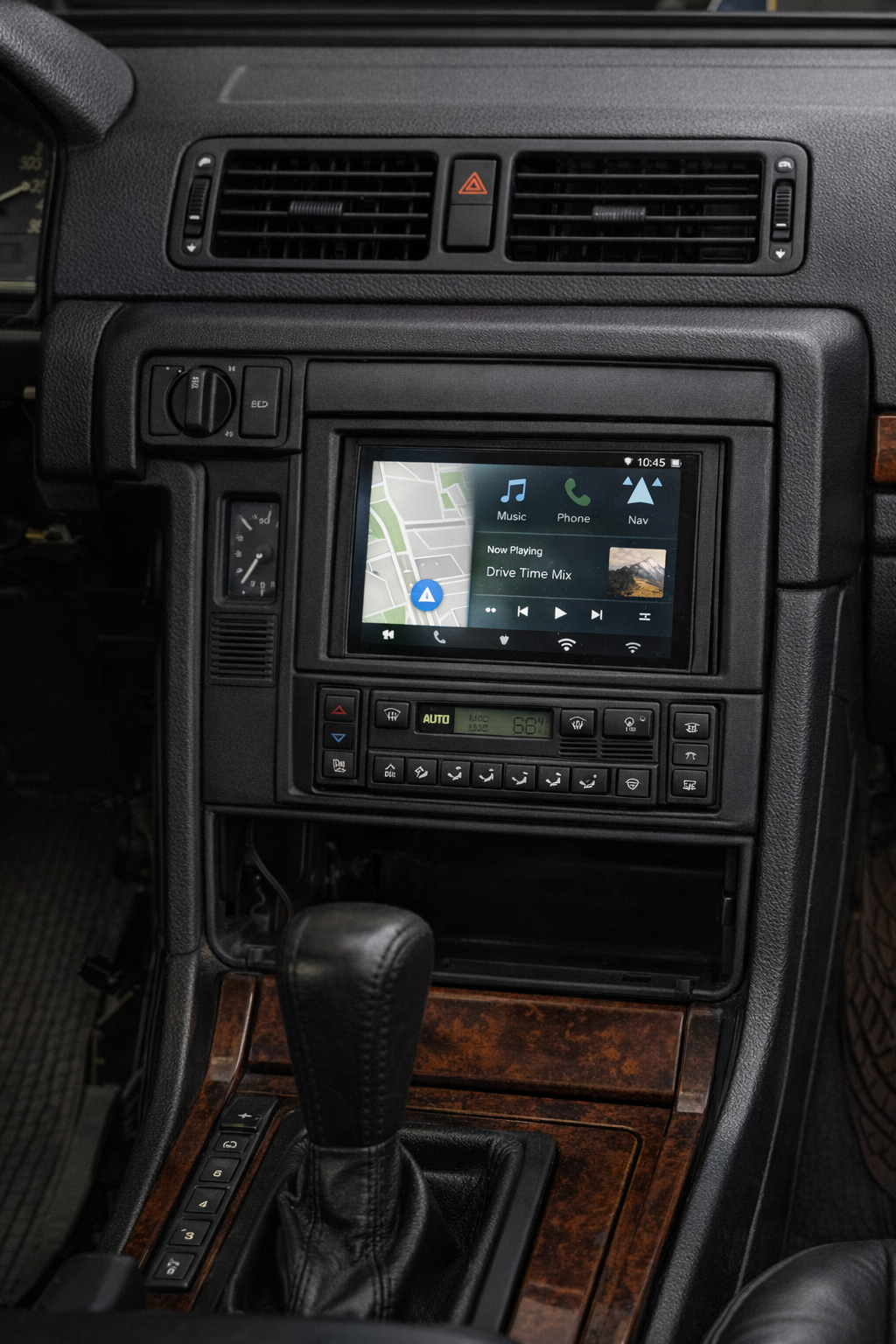 Interior Subsystem
Original P38 architecture, custom frame, touchscreen, and correct HEVAC integration.
The retrofit matters because it shows the same underlying capability as the wider restoration: understand a legacy system in detail, identify the weak point, and rebuild it in a way that is cleaner and more usable.